
19 July 2026 · Naman Care Home
Stroke Recovery Timeline: What Nepali Families Expect
A month-by-month guide to stroke recovery for Nepali families — what happens after discharge, when progress comes, how rehab helps.

When someone you love has a stroke, the hospital saves their life — and then, often quite suddenly, sends them home. Many families in Nepal tell us the same thing: the discharge day was more frightening than the stroke itself. The doctors did their part. Now what?
This guide walks you through what stroke recovery typically looks like, month by month, so your family can plan with clear eyes instead of fear.
At a glance: most stroke recovery happens in the first 3–6 months · structured rehabilitation in this window makes the biggest difference · recovery continues, more slowly, for years · the goal is independence in daily life, not just survival.
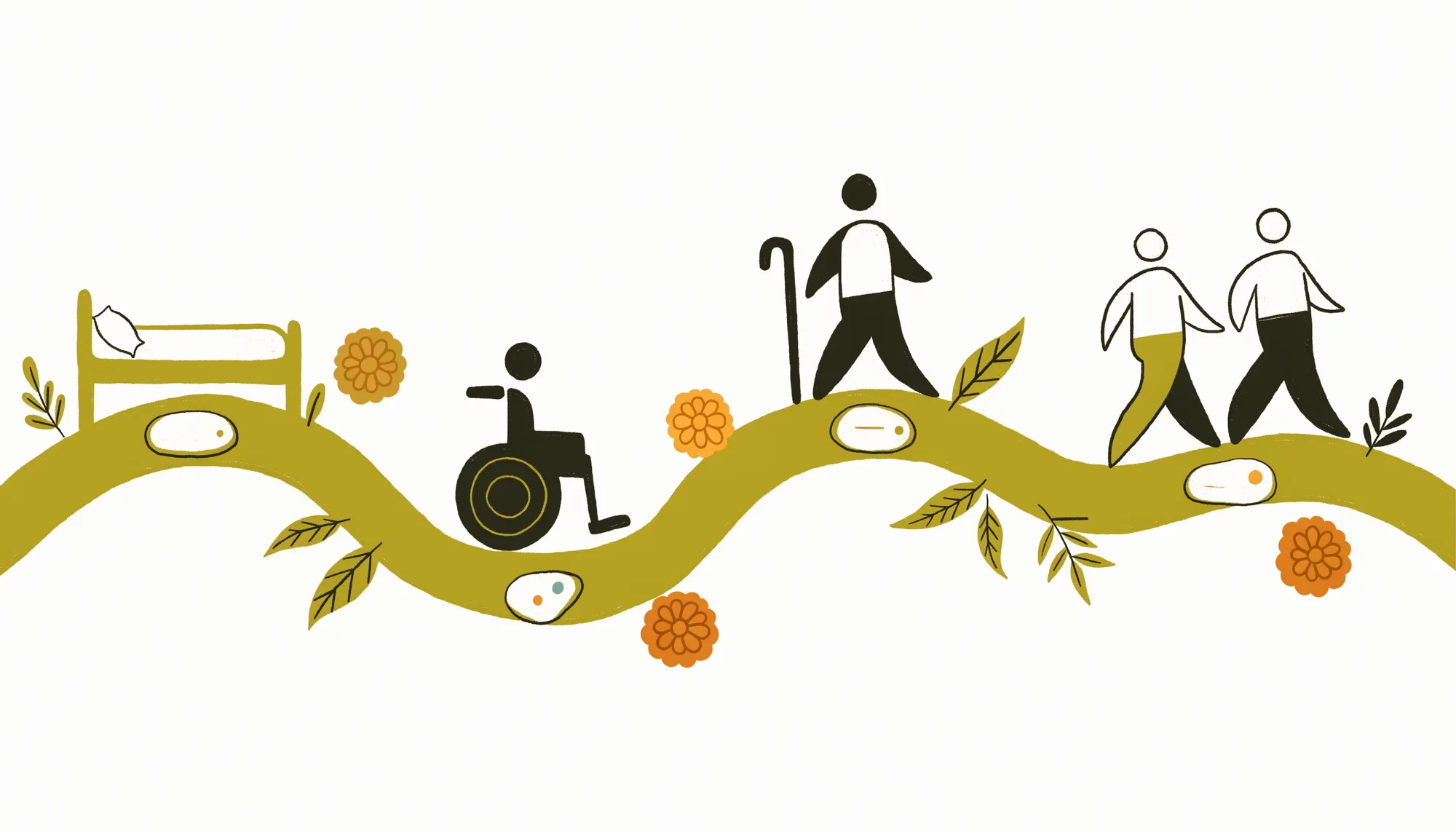
The first two weeks: stabilising, not recovering yet
Right after discharge, the priority is preventing complications — a second stroke, pneumonia from swallowing difficulties, bed sores, falls. This is when families feel most out of their depth at home, and it is the period when 24-hour nursing matters most.
What to watch for: difficulty swallowing (never force food — aspiration causes pneumonia), new confusion or drowsiness, and skin redness at pressure points. If your loved one has a feeding tube (NG or PEG), it needs trained hands, not guesswork.
Weeks 2–12: the golden window
This is when the brain is most able to rewire itself — doctors call it neuroplasticity. Improvement in this window is not luck; it is largely a function of how much structured, repeated practice the person gets.
What structured rehabilitation looks like in these weeks: physiotherapy daily or near-daily, not once a week — relearning to sit, stand, balance, and walk; speech and swallowing therapy if speech or eating was affected; and occupational practice with daily tasks — holding a cup, buttoning a shirt, moving from bed to chair safely.
A hard truth we share gently with families: informal care at home, with love but without a rehabilitation plan, often means this window partly closes unused. It is the single most common regret we hear from families who come to us at month six.
Months 3–6: visible progress, changing needs
By now, patterns are clearer. Many people regain walking with support, clearer speech, and more independence in eating and dressing. Therapy shifts from basic movement to endurance, fine motor control, and confidence — walking further, speaking in longer sentences, doing more without help.
This is also when emotional recovery needs real attention. Depression after stroke is common and treatable; it is not weakness, and it is not "just how he is now." A daily routine with activity, company, and purpose does as much for mood as any medicine.
Months 6–12 and beyond: slower, but not stopped
Progress after six months is slower — and absolutely still real. We have watched residents take first independent steps at month nine and regain clear speech after a year. The recovery curve flattens; it does not end. What matters now is maintaining gains, preventing falls and stiffness, and building a life around the person's new abilities.
Questions families ask us
Can recovery happen at home instead of a facility? Yes, when the family can arrange daily therapy, safe equipment, and someone trained for emergencies. The honest question is not "home or facility?" but "structured or unstructured?" Structured wins, wherever it happens. Our sister organisation Heal Home Care has provided home nursing in Kathmandu since 2010, and we help families choose honestly between the two.
How long will my father need care? Plan in phases, not totals: an intensive phase (roughly the first three months), a consolidation phase (months three to six), then a reassessment. Many families start with residential rehabilitation and step down to day care or home visits.
What does stroke rehabilitation cost in Kathmandu? It varies with room type and care intensity — see our rooms and pricing for current ranges. We put costs in writing before admission, never after.
Where Naman fits
Naman Care Home has provided residential stroke and neuro rehabilitation in Kathmandu since 2018 — physiotherapy, speech therapy, and 24-hour nursing under one roof, minutes from Gangalal Hospital at our Maharajgunj branch. Families are part of the plan from day one: you will always know what we are working on and how it is going.
If your family is standing in that frightening week after discharge right now, call us at 9851198668 or send us a message. Even if Naman is not the right fit, we will help you understand your options — that conversation costs nothing.
Related reading: Post-stroke rehabilitation care · How to choose a care home in Kathmandu · Our rooms
Speak with a nurse today
WhatsApp is fastest; both branch phones are answered 24 hours a day.