
Pipalbot (Maharajgunj)
Our first home — since 2018
Our Pipalbot branch sits on a quiet lane in Maharajgunj, just behind Gangalal Hospital and a short walk from Neuro Hospital. Families choose it for the same reason we opened here: when a hospital day suddenly turns into a hospital admission, the ambulance ride is measured in minutes.
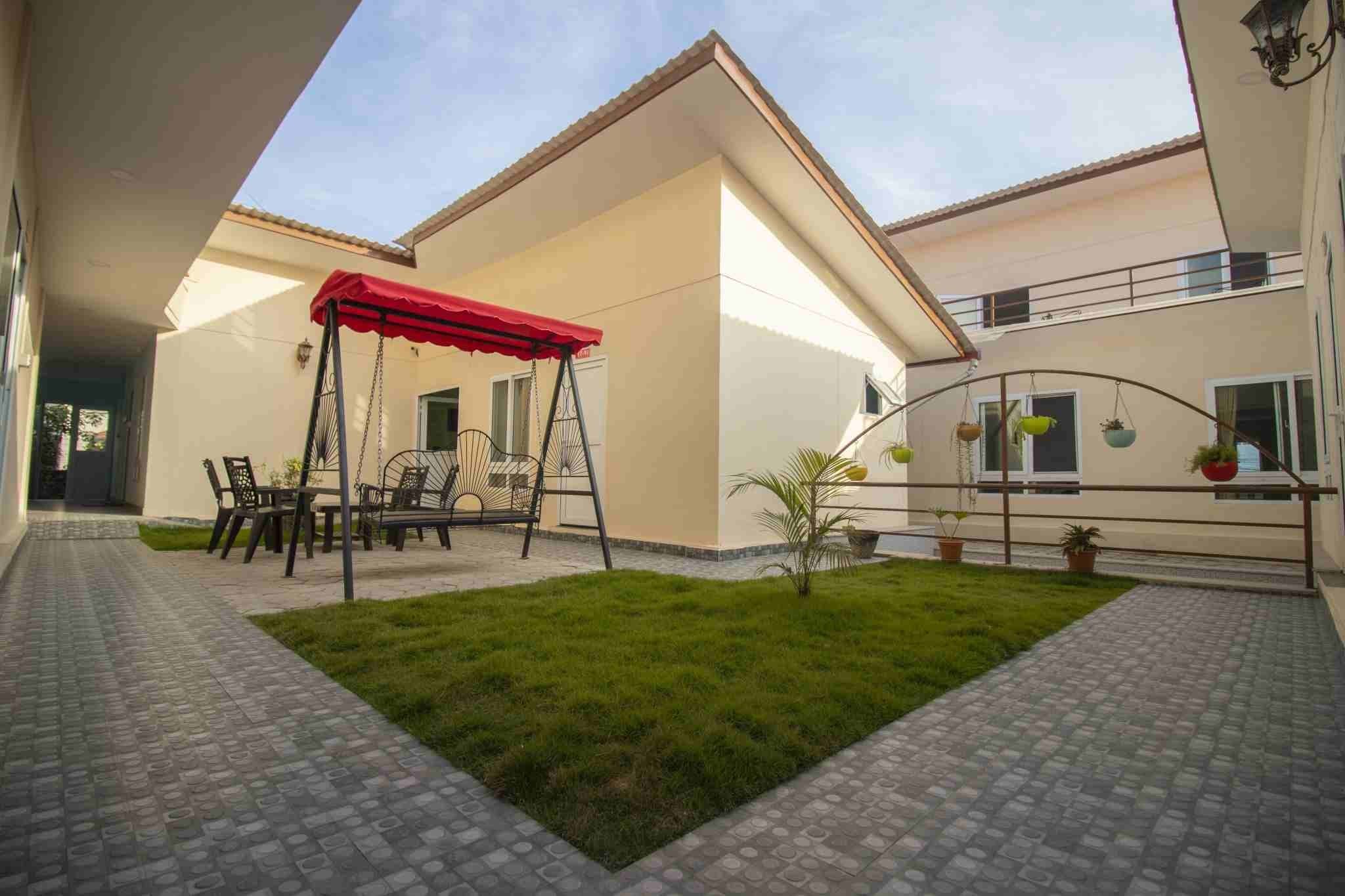
The building was adapted for elder care from the ground up — level thresholds, ramps where stairs used to be, wide doorways for wheelchairs, and rooms that catch the morning sun. There is a garden with a swing where residents take tea in the afternoon, and a treatment room where our physiotherapists work alongside the nursing team.
Address
Sallaghari Marg, Maharajgunj, Kathmandu
Near Gangalal Hospital
Phone
01-4017112
Open
24 hours, every day of the year
Find us
Sallaghari Marg, Maharajgunj
What this branch offers
Minutes from Gangalal & Neuro Hospital
Direct ambulance access if a resident needs to be admitted — a decision that can save critical time.
Old-age-friendly building
Ramps, wide corridors, level thresholds and grab-rails throughout. Nothing to trip on.
Garden and veranda
A green courtyard with the red-canopy swing where residents sit for tea, sunlight and family visits.
On-site physiotherapy
Bedside or in our dedicated treatment room, on the same schedule as nursing rounds.
In-house kitchen
Home-style Nepali meals prepared on site, adjusted for diabetes, low-salt and soft-diet needs.
Transport for hospital visits
We arrange the vehicle and a caregiver to accompany the resident to appointments.
Old age home in Maharajgunj — the care home behind Gangalal Hospital
Naman's Pipalbot branch is what most families in the north-Kathmandu area mean when they search for an “old age home in Maharajgunj” or a “care home near Gangalal Hospital.” We sit on a quiet lane behind Gangalal (Shahid Gangalal National Heart Centre) and a short walk from Neuro Hospital and B&B Hospital, which is the reason we opened here in 2018: when a resident's chest pain, a sudden weakness on one side, or an unexplained fall needs a hospital scan urgently, minutes matter, and Pipalbot is a short ambulance ride from all three. Most of our residents came to us from a discharge at one of these hospitals, and many go back to the same hospital's outpatient clinic for their follow-ups.
The house was adapted for elder care from the ground up — level thresholds and ramps where there used to be stairs, wide doorways for wheelchairs and hoyer lifts, grab-rails in every bathroom, and rooms positioned to catch the morning sun. Our team lives on site — a full nursing shift 24 hours a day, physiotherapists who work morning and afternoon in the treatment room, an in-house kitchen preparing home-style Nepali meals adjusted for diabetes, low-salt and soft-diet needs, and doctor rounds on the schedule the resident's care plan calls for. Room categories range from a private cabin to a shared four-bed ward to the High Care Unit for residents who need closer monitoring; the room decision is a conversation, not a fixed price list.
The residents at Pipalbot are a mix that surprises new families. Some are with us for a short recovery — three weeks after a hip replacement, a fortnight after a stroke, six weeks after a serious pneumonia — and go home when the strength is back and the medications are settled. Some are with us for months of rehabilitation — post-stroke, post-neurosurgery, or after a spinal injury — and we build a longer plan around them. Some are with us as their long-term home, because staying alone was no longer safe and the family circumstances did not allow full-time care at home; those residents have their own routines, their tea time in the garden, and their own room that we treat as their room, not a hospital bed. All three groups share the same nursing team, the same kitchen, and the same neighbourhood.
Visiting is straightforward — you can drop in during the day without an appointment, though calling ahead means a nurse can walk you through the ward, show you the room categories, and go through medical needs, medications, and costs without being interrupted by an ongoing round. Families sometimes ask which branch — Pipalbot or Bansbari — is the right one for their loved one. The programme, the team training, and the daily routine are the same in both homes; the practical choice is usually which is nearer for family visits, and both are within a short drive of Gangalal Hospital. If Pipalbot is full at the moment you need us (this happens), Bansbari almost always has a room, and vice versa.
What to expect on your visit
- A nurse walks you through the ward and shows you the room types.
- We’ll go over medical needs, medications, and diet.
- You’ll get an honest picture of cost — nothing hidden.