
Brain and Spine Rehabilitation Care
After a brain or spine injury, the path forward is rarely straight. Some days feel like progress, some feel like nothing at all. Our team walks that path with you, one small function at a time.
What care includes
- Physiotherapy focused on function — sitting, transfers, standing, walking as recovery allows
- Careful positioning and turning to prevent pressure sores and contractures
- 24-hour nursing with catheter and bowel-programme care as needed
- Doctor rounds and hospital escort for follow-up scans and reviews
- Cognitive-support activities where memory or attention has been affected
- Family updates and honest planning about long-term needs
Who this is for
Families whose loved one has come through neurosurgery, a spinal cord injury, or a serious brain event and needs skilled continued care.
Brain and spine rehabilitation in Kathmandu — one function at a time
Brain-and-spine rehabilitation covers the recoveries that stroke rehab does not: traumatic brain injuries after road accidents and falls, spinal cord injuries from motorbikes or work-site falls, the weeks and months after neurosurgery for a tumour, aneurysm, or spinal decompression, and neurological conditions like Guillain-Barré syndrome or transverse myelitis where the nervous system is repairing slowly. All of these recoveries share one shape — they are measured in months, not weeks, and progress arrives as small functions, not milestones. That shape is what a busy hospital ward cannot easily hold, and it is what our home is built for.
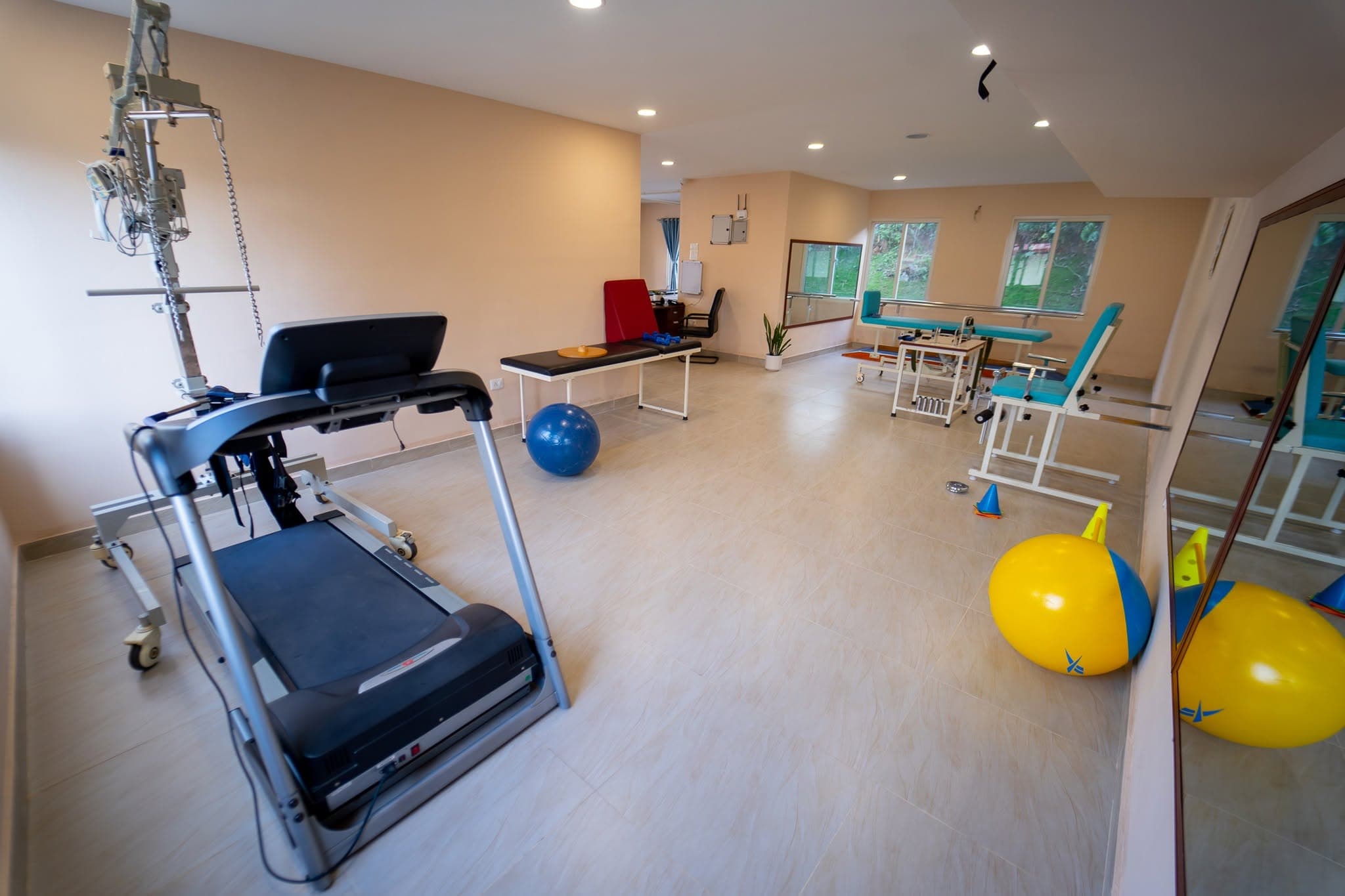
The clinical daily work is careful and specific. For residents who are bed-bound or partially so, our nurses turn and reposition through the day and night to prevent pressure sores and contractures, manage catheters and bowel programmes, and — where present — clean and suction tracheostomies and run PEG-feeding schedules to the exact clinical plan. Physiotherapy respects spinal precautions where they apply (log rolls, no lifting through the injury), and progresses in the order the nervous system asks for: passive movement while joints are stiff and strength is absent, active-assisted work as it returns, then sitting, transfers, standing frame, and — where recovery reaches it — steps between parallel bars. We do not push a body faster than the surgeon has cleared and the imaging supports.
The cognitive side of brain-and-spine recovery is where families sometimes feel most surprised. After a serious brain injury or neurosurgery, the visible problems — a weak side, a swallowing difficulty — often improve before the invisible ones. Attention that will not hold, a short-term memory that drops the last sentence, a fatigue after twenty minutes that feels new and unwelcome. Our speech-language therapist works on cognitive-communication where relevant, and our staff structure the day so mental work happens in short spells with rest between. We coach families on what to expect and what not to correct — arguing with a patient whose memory is repairing rarely helps, and always tires everyone.
The long-term picture is honest. Some residents recover close to their previous life; some plateau at a new baseline of function and build a full life around that new baseline. Both outcomes are worthwhile and both are common. As a stay draws toward a home discharge, our physiotherapist rewrites the exercise plan for a home floor and a home bathroom, family members are shown the safe transfers and — where relevant — the catheter and PEG routines, and a follow-up window is agreed for the first weeks at home. Both branches (Pipalbot in Maharajgunj, near Gangalal Hospital, and Bansbari) run the same programme; the choice usually comes down to daily-visit distance.
Both branches offer this therapy — Pipalbot (Maharajgunj) and Bansbari. Please mention which branch is easier to reach when you get in touch.
Rooms & what’s included
General ward, private cabin, or High Care Unit — see the room categories and inclusions.
See room categories →Related services
Post-Stroke Rehabilitation Care
Structured stroke recovery care in Kathmandu — physiotherapy, speech therapy, and 24-hour nursing under one roof. Minutes from Gangalal Hospital.
Physiotherapy
Physiotherapy in Kathmandu — on-site at our Maharajgunj & Bansbari clinics. For at-home visits, sister service Heal Home Care covers the valley. Stroke, orthopaedic, balance, pain.
Speech Therapy
Speech therapy in Kathmandu for aphasia, dysphagia, articulation and voice — after stroke, brain injury or illness. WhatsApp 9851198668.
See all Naman Care Home services.
Reading for families
Stroke Recovery Timeline: What Nepali Families Expect
A month-by-month guide to stroke recovery for Nepali families — what happens after discharge, when progress comes, how rehab helps.
How to Choose a Care Home in Kathmandu: 10 Questions
A practical checklist for Nepali families choosing a care home or rehab centre in Kathmandu — the 10 questions that reveal true care.
Common questions
Can you care for someone who is bed-bound?
Yes. We have residents at every level, including fully bed-bound. Our staffing ratios and turning schedules are built for it.
Do you handle tracheostomy or PEG-tube care?
Yes — both. Our nursing team is trained in tracheostomy suction and cleaning, and in PEG feeding schedules. Please share the tube specifics before admission so we can prepare.
My mother is three weeks post-neurosurgery. When should we move her from hospital to a place like Naman?
When the treating surgeon says she is medically stable and does not need daily hospital interventions — usually two to four weeks after surgery, sometimes sooner. A step-down like Naman lets rehabilitation continue at a pace hospital rooms cannot offer, and lets the family visit in a calmer setting. Call us with the current medical summary; we will tell you what we need in place before admission.
Do you handle rehabilitation after Guillain-Barré syndrome or transverse myelitis?
Yes. Recovery from these can be long and non-linear — sometimes months in a wheelchair, then months rebuilding walking — and the daily nursing and physiotherapy at Naman is well suited to that arc. Bring recent neurology reports and current medications; we will plan the stay with your neurologist's input.
What kind of progress should we expect month by month?
Every recovery is its own. Broadly, the first month is stabilisation and preventing complications; months two and three are usually where visible functional gains arrive; from month four on, gains slow but continue. We share honest weekly progress notes and hold a family review each month, so the picture is never a surprise.