
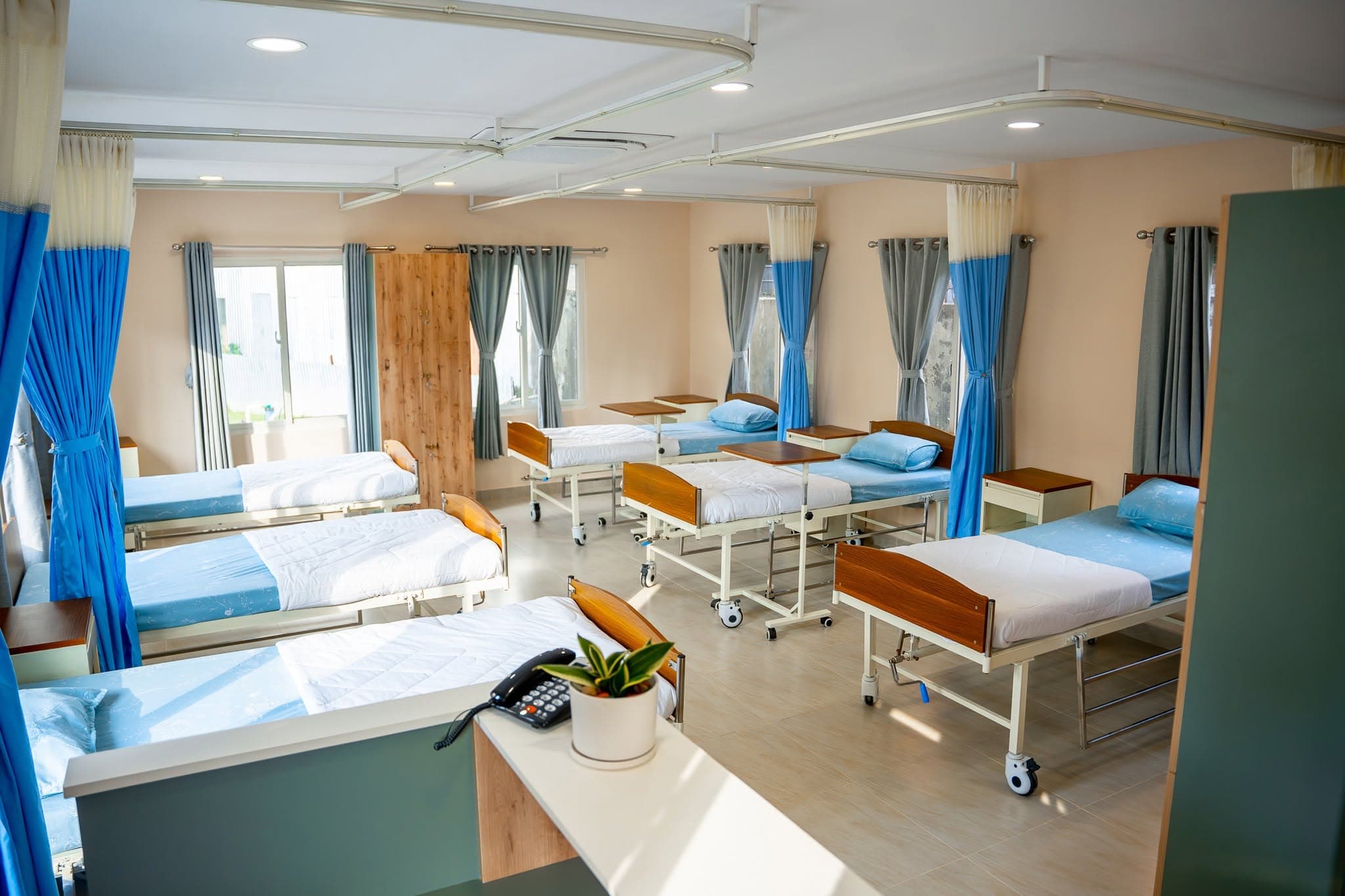
Chronic Illness Care
Chronic illness is a long conversation, not a single event. Our care is for the families who have been having it for years — and could use steady hands beside them for a while.
What care includes
- Careful medication management — the right pill, the right time, every day
- Vitals monitoring appropriate to the condition (BP, sugar, oxygen)
- Meals designed around the diagnosis — diabetic, cardiac, renal, as needed
- Doctor rounds and hospital escort for specialist appointments
- Family updates on how things are going, not just when they change
Who this is for
Families managing a long-term illness at home who need a break, a change of environment for a while, or a permanent care arrangement.
Long-term care for chronic illness in Kathmandu — steadiness, not just supervision
Chronic illness care is different from most reasons a family looks for a care home. There is often no single crisis, no discharge date to plan around. Instead, there is a long stretch — years, sometimes — of diabetes that does not sit still, a heart or kidney condition that needs careful medication, a lung condition that flares in winter, and a family caregiver who has been holding it all together and is tired in a way that sleep does not fix. We take residents for two overlapping reasons: as a permanent, unhurried place to live well with the illness, and as a respite arrangement — two weeks, a month, a season — so a family caregiver can rest and the medical rhythm can be re-set.
The daily work is quiet and skilled. Medications are given the way the prescription actually reads — the right dose, the right time, on an empty or full stomach as the drug asks. Vitals are monitored the way the diagnosis needs, not by rote: blood sugar checks for a brittle diabetic, blood pressure and weight for cardiac and renal residents, oxygen saturation for COPD. Meals are designed around the illness, cooked in a Nepali home style rather than a hospital canteen — diabetic, cardiac, low-salt, renal, texture-adjusted where swallowing has changed. Small things done consistently, every day, are what makes 24-hour care measurably safer than home for someone with an unstable chronic condition.
The moment a chronic illness turns unstable — a middle-of-the-night sugar drop, a chest pain that will not settle, a breathing rate that has crept up through the evening — is where our arrangement is strongest. A nurse assesses on the ward within minutes, calls our doctor, and if the situation needs a hospital we arrange the transfer and escort. When your loved one is stable and discharged, they come back to the same bed, the same nurses, the same medications on the same schedule. Families do not have to start over each time; the care carries forward. Our proximity to Gangalal Hospital and neighbouring specialist centres matters here.
Family involvement stays central. Some residents live with us permanently and their family visits every day. Others use us for a respite month while the daughter-in-law rests, or for the winter when the flat is cold and difficult. Others still come to us for a step-up when a home caregiver leaves for a few weeks. All of these work, and we plan the stay honestly around the situation — including a phased return home when that is what the family wants. Both branches (Pipalbot in Maharajgunj and Bansbari) run the same programme; families usually pick the one that is easier for the daily visit.
Both branches offer this therapy — Pipalbot (Maharajgunj) and Bansbari. Please mention which branch is easier to reach when you get in touch.
Rooms & what’s included
General ward, private cabin, or High Care Unit — see the room categories and inclusions.
See room categories →Related services
Aged & Elderly Care
Professional elderly care in Kathmandu — 24-hr nursing, physiotherapy and a warm home environment at our Maharajgunj and Bansbari branches.
Post-Hospitalization (Discharge) Care
Skilled step-down care after hospital discharge — nursing, medication management, and gentle recovery. Minutes from Gangalal Hospital. Call 9851198668.
Alzheimer's & Dementia Care
Patient, dignified dementia and Alzheimer's care in Kathmandu — familiar routines, calm rooms, trained staff. Two branches. Call 9851198668.
See all Naman Care Home services.
Reading for families
Common questions
Can we come for a short trial stay?
Yes — many families start with a two-week respite stay to see how the fit is. There is no pressure to continue.
What if my father's condition suddenly worsens at night?
A nurse is on duty every night. If the situation needs a doctor we call ours; if it needs a hospital, we arrange the transfer and one of our nurses escorts him. When he is stable and discharged, he comes back to the same bed and the same medication schedule — you do not restart care from scratch.
Can respite become permanent, or vice versa?
Yes, both directions. Some families start with a two-week respite and decide the arrangement suits everyone; others live with us for months, then plan a phased return home when the family situation changes. We will not pressure the direction — the goal is what actually works for your loved one and for you.