
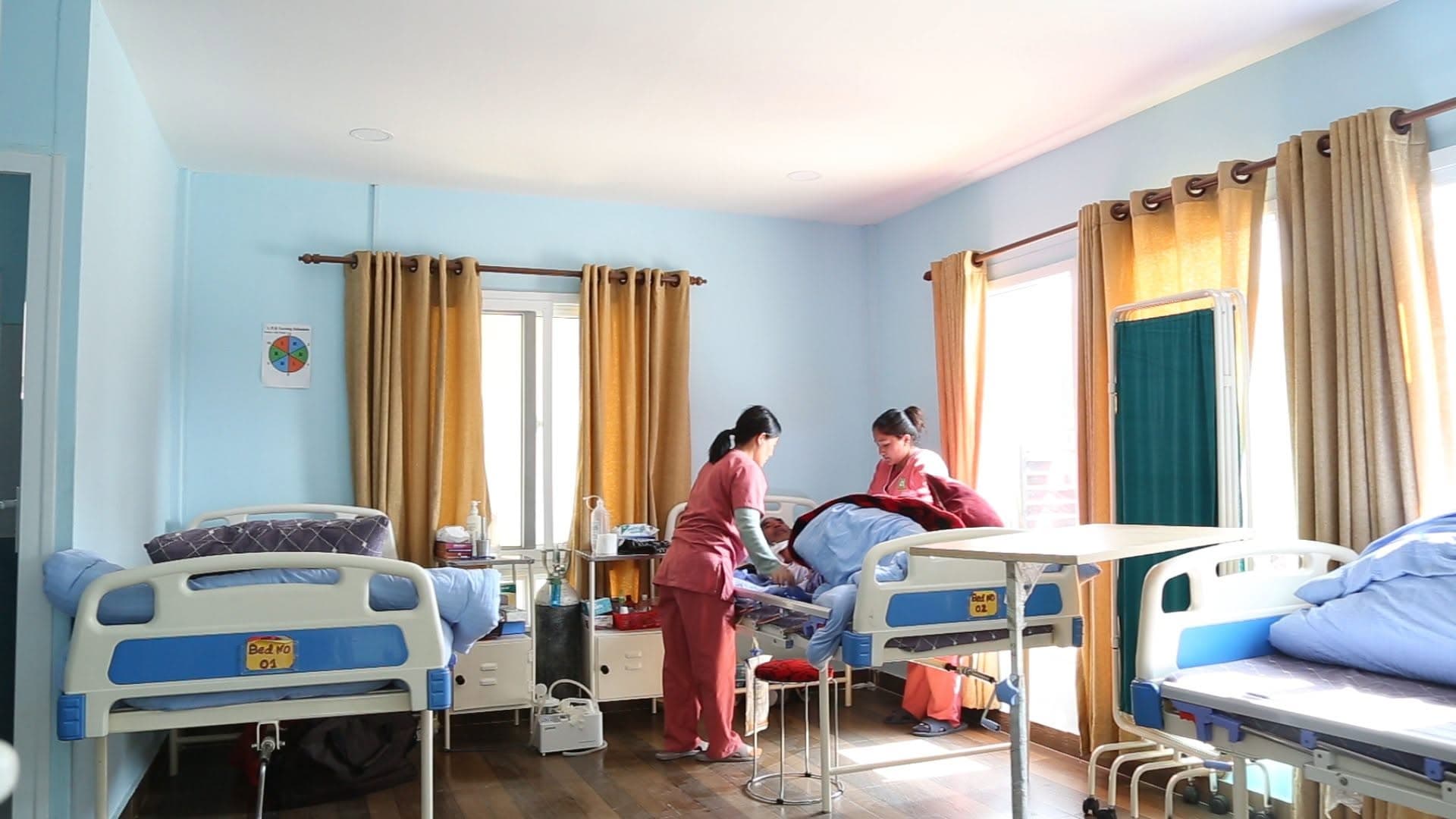
Post-Hospitalization (Discharge) Care
The hardest week is often the first week home. New medications, a new routine, and everyone in the family trying to remember what the doctor said. This is exactly the moment we are built for — a soft landing between hospital and home.
What care includes
- Medication management with the exact hospital discharge plan
- Wound and dressing care, drain and catheter care if needed
- Physiotherapy to rebuild strength lost to bed rest
- 24-hour nursing so nights are covered too
- Meals suited to the recovery — soft, diabetic-friendly, whatever the situation asks
- A clear plan and paperwork for going home when it is time
Who this is for
Families who feel their parent has been discharged 'a little early' and needs one more careful week or two before going home.
Care after hospital discharge in Kathmandu — the soft landing that keeps recovery on track
Post-hospitalisation care — sometimes called step-down or transitional care — is the short structured stay between a hospital discharge and going home. It exists because the hardest week of most recoveries is the first week home, not the last week in the ward. New medications on a new schedule, a wound to keep clean, drains or a catheter that need honest attention, and a family that is exhausted from the hospital days trying to remember what the discharging doctor said. In Kathmandu, hospital discharges are often earlier than families expect — beds are needed, and once the medical crisis is past, the ward's job is done. Our home is what fits in that gap: skilled continued care in a quieter setting, until the recovery is steady enough for home to be safe.
The work is careful, not dramatic. Nursing runs the discharge medication plan to the exact clock the hospital wrote — a common cause of early readmission is a missed antibiotic dose or a diuretic given at the wrong time. Wound and dressing care follows the surgical team's plan; drain outputs are tracked; catheter care and, where relevant, colostomy or PEG-tube routines are handled by staff trained in them. Physiotherapy starts gently and rebuilds the strength that a hospital bed takes away — a fortnight of bed rest costs an older adult a surprising amount of leg power, and getting it back safely is the difference between walking home and going home in a wheelchair. Meals are adapted for the recovery in front of them: soft for post-swallow surgery, diabetic-appropriate for a resident whose sugars are unsteady, protein-forward for wound healing.
Most stays here are between one and six weeks, calibrated to the recovery in front of us. A hip or knee replacement stay is usually two to four weeks, ending when the resident can safely manage the steps at home. A post-cardiac-event stay tends to be shorter but stricter on blood-pressure and rhythm monitoring. A post-abdominal-surgery stay is often longer, driven by wound healing and the return of normal digestion. For older residents who came in with pneumonia, dehydration, or a fall — situations where 'medically stable' and 'safe to be home alone' are quite different — we work with the family to decide when going home really is going home, not another admission a week later. Our doctor rounds on-site, and hospital escorts for follow-up scans or specialist reviews are arranged when needed.
When a stay is drawing to a close, we plan the going-home the same way we planned the coming-in. The resident's daily plan is rewritten for the layout of the home they are returning to — which bathroom will be used at night, where the medication box will sit, what the family will manage themselves. If the family wants, we can arrange a home nurse or physiotherapist for the first few days home, or schedule a follow-up call at day three and day seven to catch anything that slips. Same-day admission from a hospital discharge is nearly always possible; call us in the morning with the discharge summary and current medication list. Both branches (Pipalbot in Maharajgunj, near Gangalal Hospital, and Bansbari) run the same programme; the choice usually comes down to which is nearer for the family's daily visits.
Both branches offer this therapy — Pipalbot (Maharajgunj) and Bansbari. Please mention which branch is easier to reach when you get in touch.
Rooms & what’s included
General ward, private cabin, or High Care Unit — see the room categories and inclusions.
See room categories →Related services
Post-Stroke Rehabilitation Care
Structured stroke recovery care in Kathmandu — physiotherapy, speech therapy, and 24-hour nursing under one roof. Minutes from Gangalal Hospital.
Aged & Elderly Care
Professional elderly care in Kathmandu — 24-hr nursing, physiotherapy and a warm home environment at our Maharajgunj and Bansbari branches.
Medical Escort Service
Nurse-escorted travel to hospital appointments, scans, and procedures in Kathmandu. Book by the visit. Call 9851198668.
See all Naman Care Home services.
Reading for families
How to Choose a Care Home in Kathmandu: 10 Questions
A practical checklist for Nepali families choosing a care home or rehab centre in Kathmandu — the 10 questions that reveal true care.
Stroke Recovery Timeline: What Nepali Families Expect
A month-by-month guide to stroke recovery for Nepali families — what happens after discharge, when progress comes, how rehab helps.
Common questions
Can we admit on the day of discharge?
Almost always yes. Call us in the morning of the discharge with the plan and we will have the room ready.
What documents do we need to bring?
The discharge summary, current medications, and any recent scans or reports. If something is missing we can still admit — we will follow up with the hospital.
Will Naman send the resident home when they are ready?
Yes. Our team writes a home-care plan and, if the family wants, we can arrange a home nurse or physiotherapist for the first few days at home.